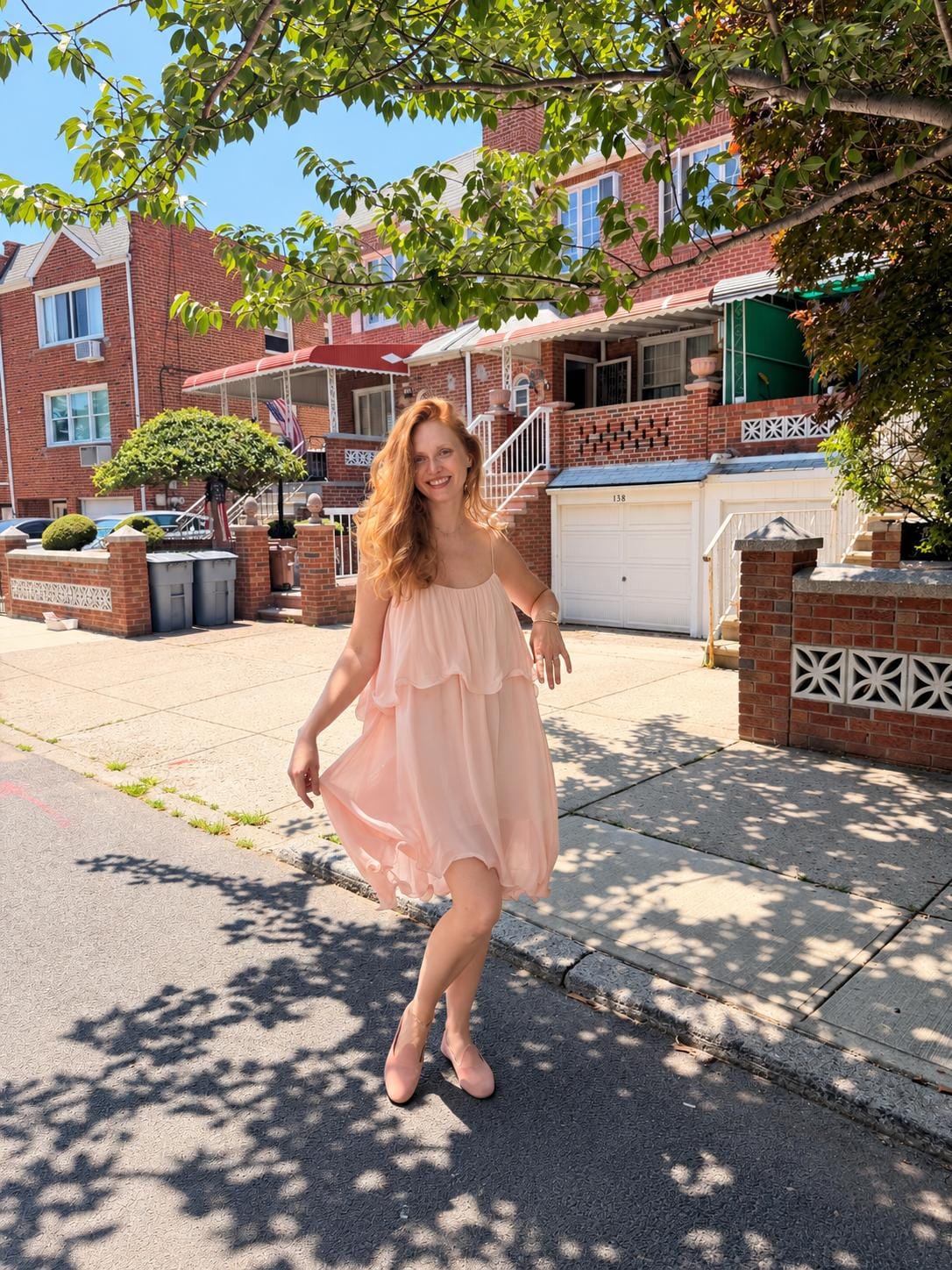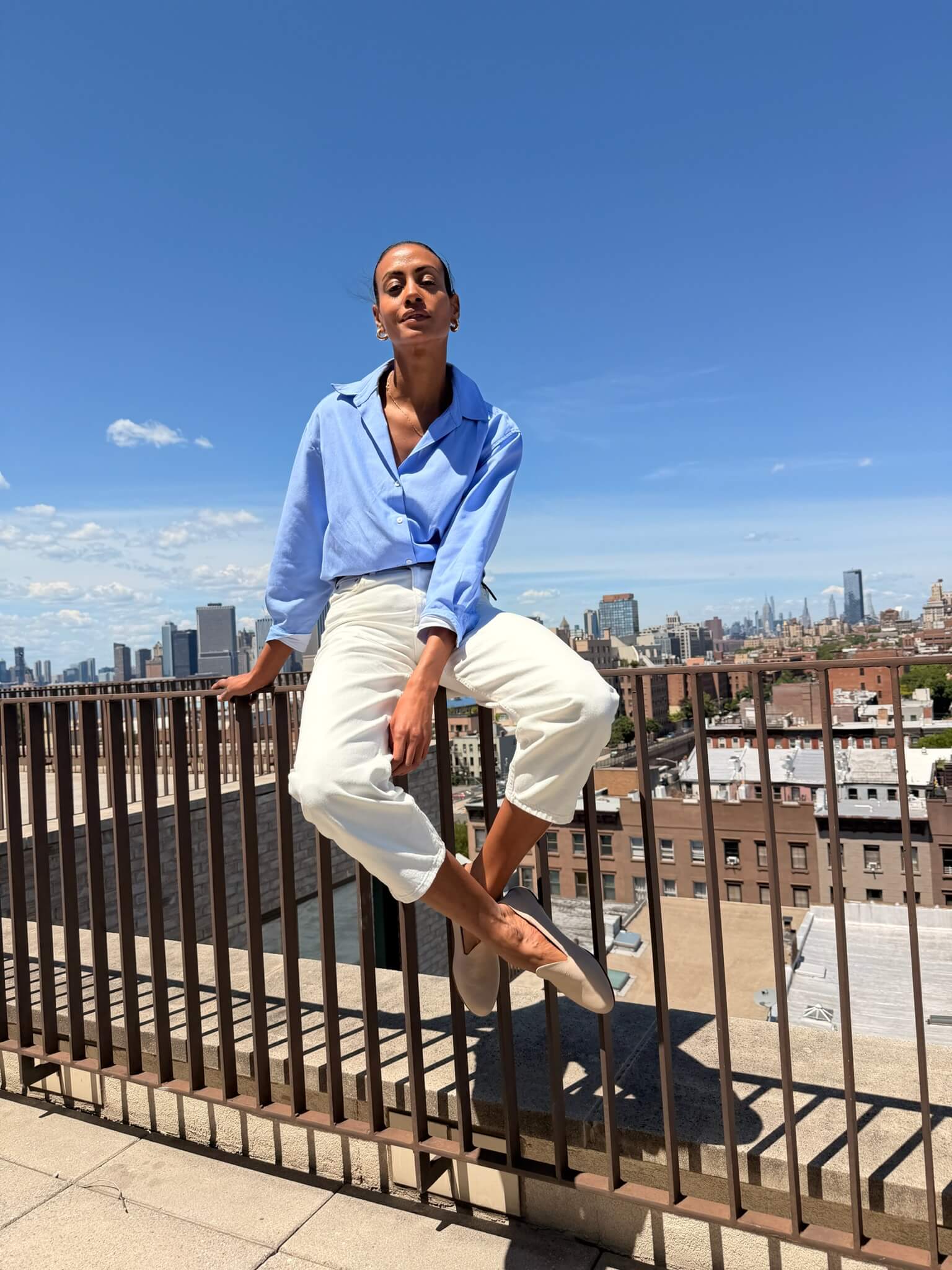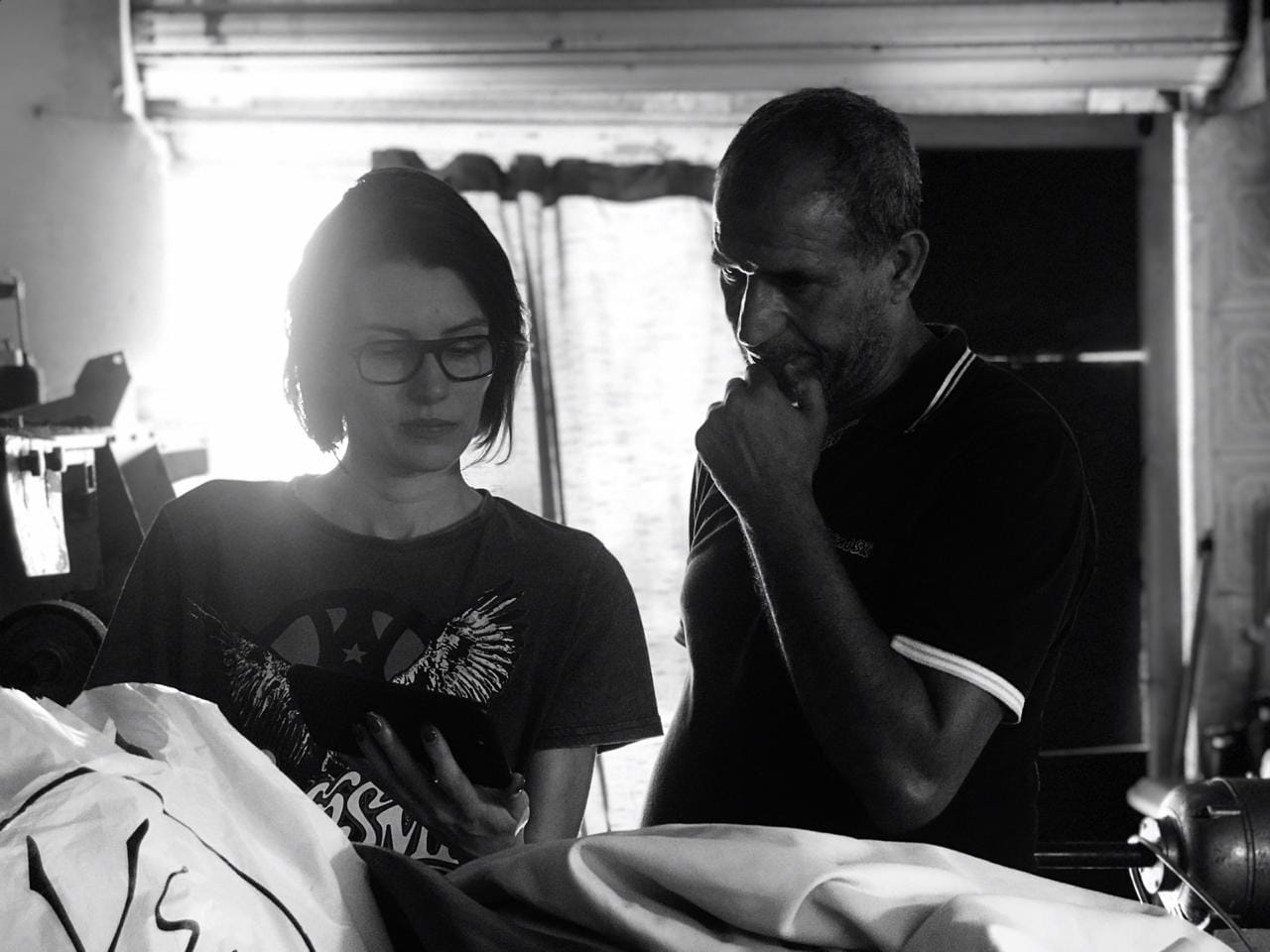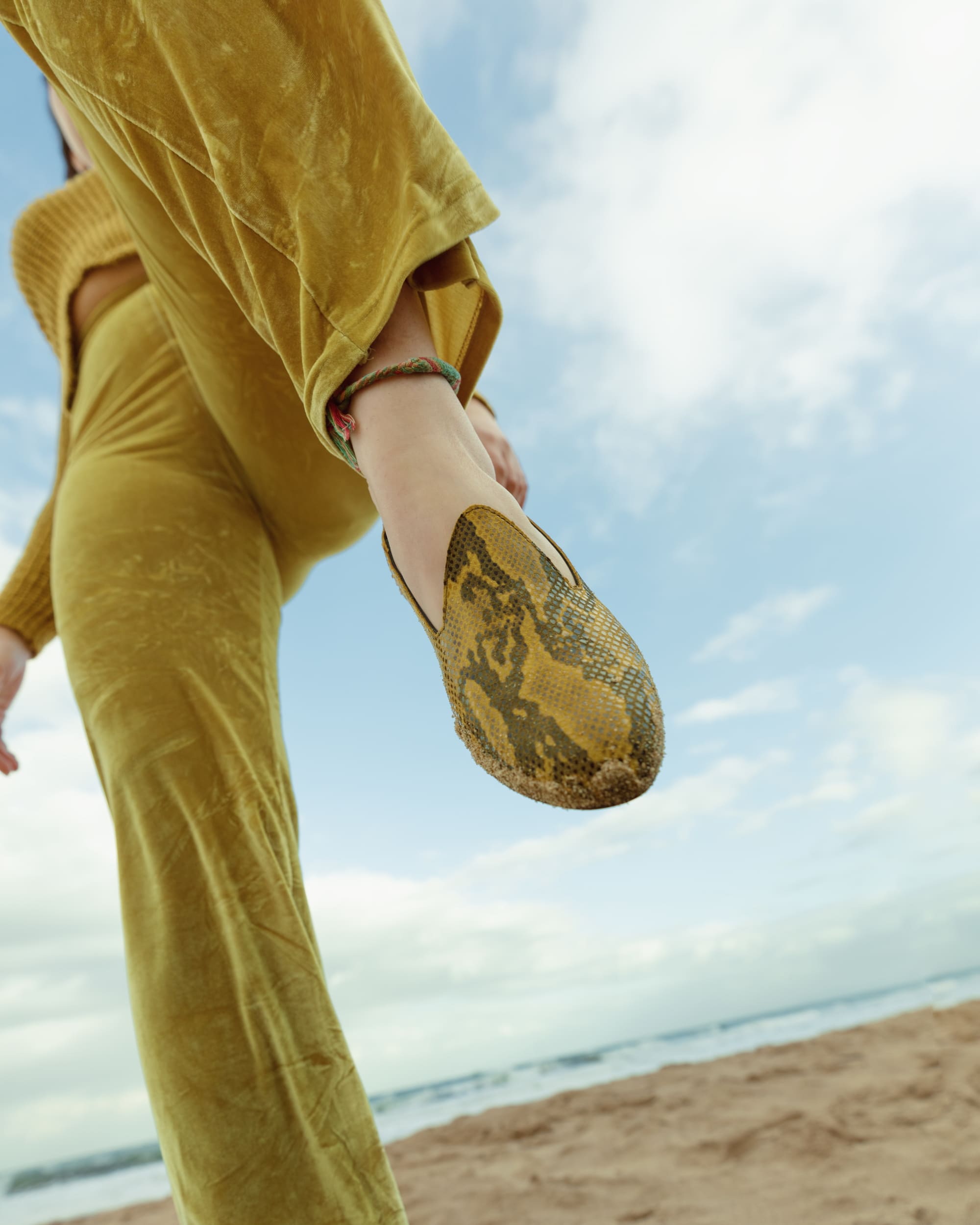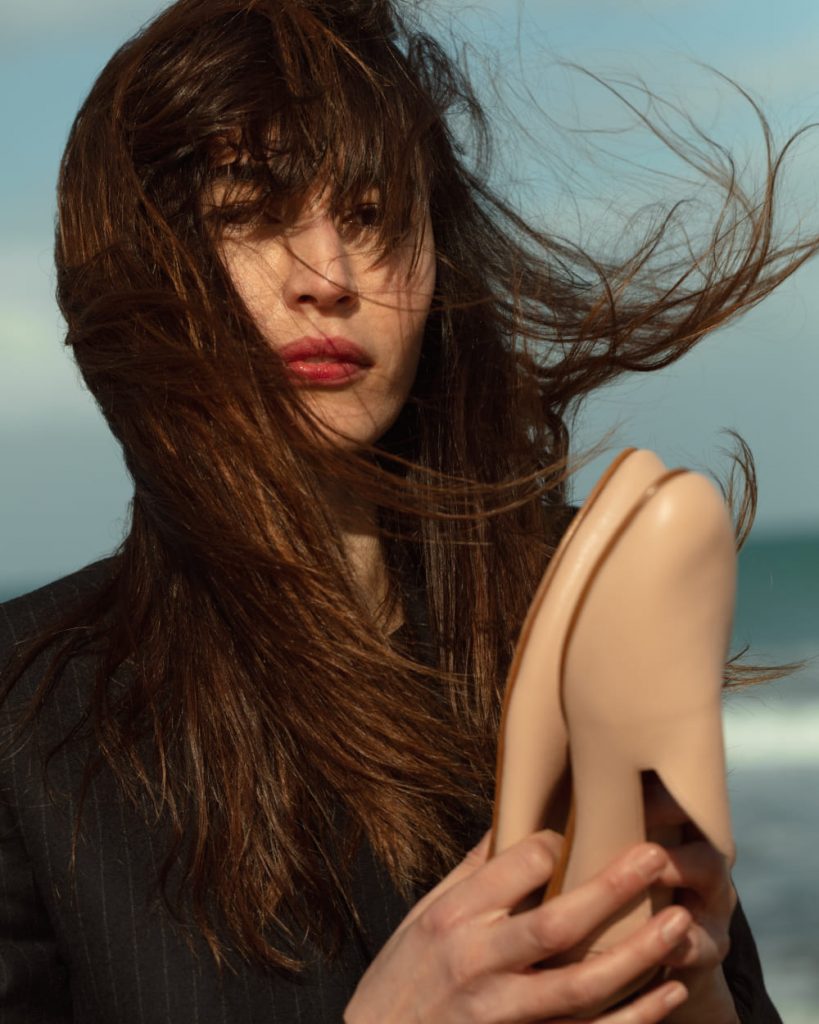
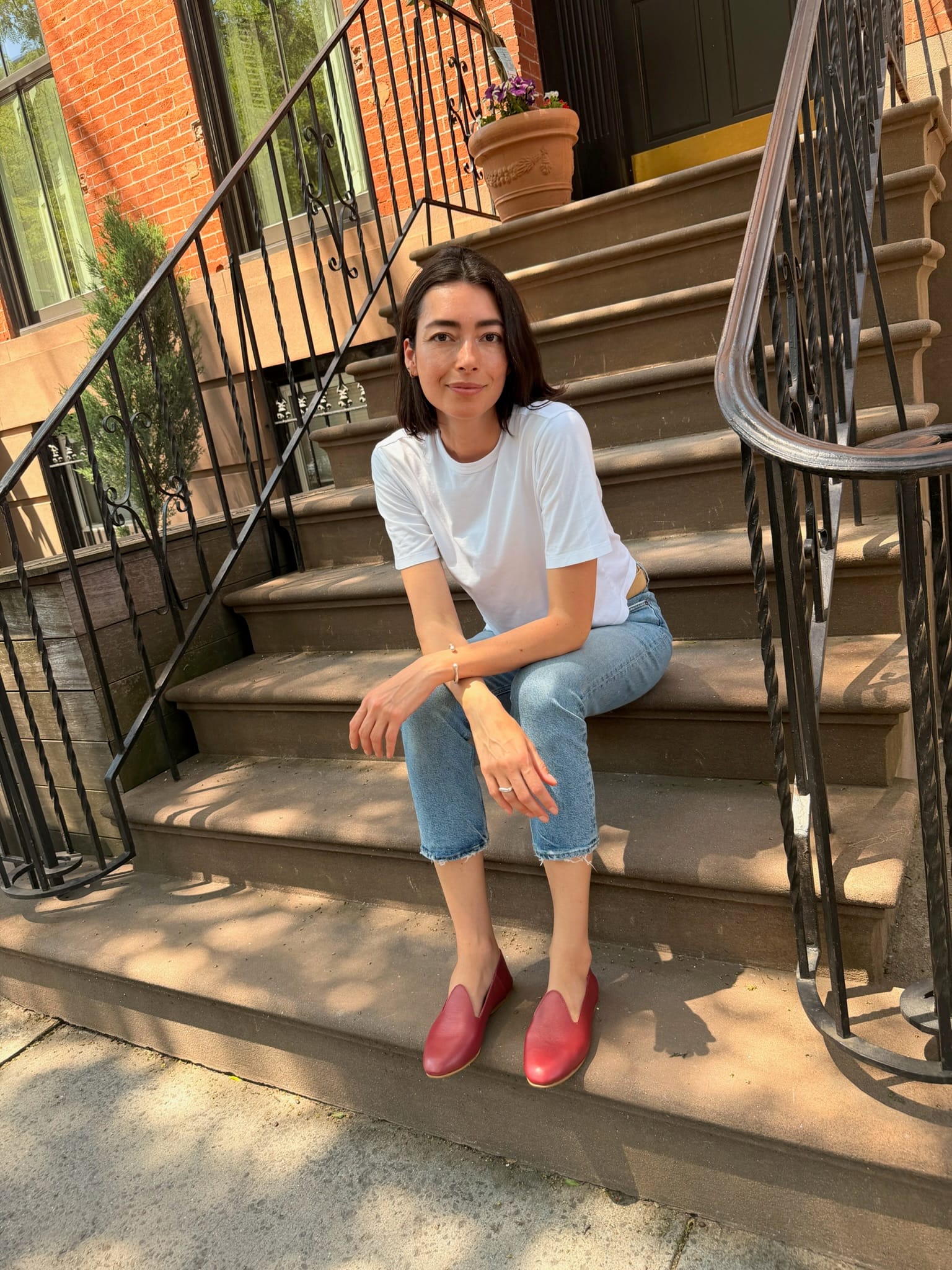
At OSAY, we’ve always believed our stories are yours. This month our cofounder Kenza Fourati begins a series about the women she’s spent her career alongside: models, mothers, women who’ve lived several lives inside one. Each is photographed in our shoes, in her own clothes, her own self. We begin with Natalia Costa.
I met Natalia the way you meet people in this industry: on a job. There was a client in Florida who booked the same models several times a year, so a few of us would end up there together, again and again, in a place that wasn’t anyone’s home. The days were long. And the evenings were ours.
I’d usually rent a car and we’d just drive. Out of the resort, into the small Floridian towns with nowhere to be, the light going soft over the ocean. Dinners that stretched for hours. And there’s something about being out of context like that, away from your real life, your city, the people who know you as one thing, that lets a conversation go somewhere it never goes at home. That’s where I came to know Natalia. You’ve probably passed her face thousands of times, plastered on a wall.
What struck me, on those nights, was how she saw the world. There’s a wisdom in Natalia that feels older than she is, a calm that settles a room. And I remember thinking: how is it that someone this seen is so little known? That question is a big part of why I’m doing this at all.
So let me introduce you to her properly.
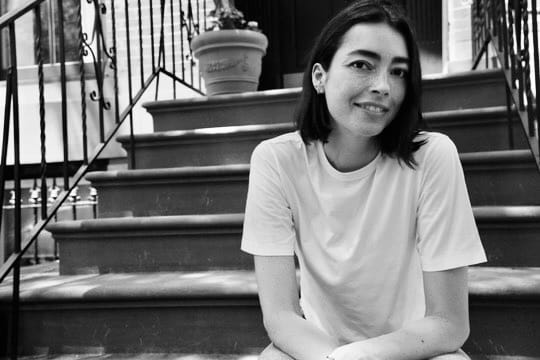
Sometimes I feel like I’ve lived several different lives inside one career, she told me. And she has. She left Brazil a couple of months after turning sixteen, and more than twenty years later she’s still working as a model, still curious, a single mother of two.
But first there was a grey, misty morning in Milan, and a girl who owned no coat.
Milan, at sixteen
It was September, Fashion Week, and she’d landed from São Paulo with a week of English from a tutor her parents had scraped together. Italian was a complete mystery, and she was mesmerized by the sound of it. Here I was, she remembers, a girl from humble beginnings on the outskirts of São Paulo, about to step into the greatest fashion houses. The agency sent a taxi to collect her from the airport, drove her to the office, handed her a list of castings, showed her how to read a paper map, and sent her out. No shower, no rest, no moment to absorb that her whole life had just changed. Just, good luck. And off I went.
One of her first castings was Giorgio Armani. She did the casting, then the fitting, not knowing that a fitting usually meant you’d booked the show. When someone said see you at the show, she started jumping up and down, the way any sixteen-year-old would. That feeling, she says, has never left her. More than twenty years later, every new job still feels like the first.
What no one told her
The work itself never surprised her. What did was how little space there was for the person inside the model. You showed up. You did the thing. You left. And at sixteen, alone in a country where the language was new and the rules were unspoken, she was quietly teaching herself what adulthood meant while everyone around her assumed she had already learned. Being alone never frightened her. Solitude was the right shape for who she was. She wasn’t lonely. She was watching a whole world unfold.
The one thing she wishes someone had said to her, in those early years: you have agency.
For a long time she believed the agencies held everything. Nobody had to tell her; it was simply the air she walked into at sixteen. It took years for her to learn the line that undoes that assumption. Professionalism matters. Self-abandonment does not. Valuing her own voice, as it turned out, never made her less of a professional. It made her more of one.
The school her mother meant
For a while she mourned the education she hadn’t taken. The classrooms, the friendships that never got to settle, the quiet steady road she had traded for airplanes. It was her mother who reframed it, gently and completely: you are in a different school. And Natalia has come to see it that way too. What she has learned cannot be printed on a diploma. How to read a room in a language she does not share. How to hold a set together when every person in it is pulling in a different direction. How to sit with people from every continent and find the human thread. It is a rare kind of intelligence, and one the world has never quite figured out how to honor.
On loving what time has given
She will tell you, without softening it, that she is glad to be aging. I’m genuinely happy our industry has finally accepted that we all age, she says. That it has begun to make room for women beyond their twenties. For so long the tide ran the other way, and fighting it took more out of women than anyone was measuring. At eighteen, I thought beauty was enough. Now I believe presence is far more compelling. What she has come to know, standing in front of a camera long enough to see the shift, is that the lens photographs more than a face. It photographs the relationship you have with yourself. And the older she gets, the more interesting that relationship becomes. I love what time has given me.
The pain that had a name
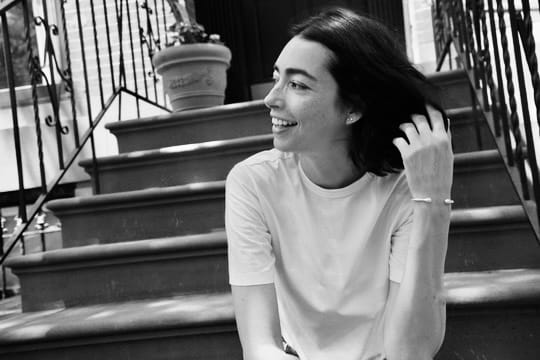
None of it came without cost. There were years her body carried a pain she could not name, until she followed the ache back to its source and understood: it was the marriage, quietly shrinking her, that had to go. We are the first generation that leaves for the kids, she read somewhere, and the sentence lodged in her.
The pain went when she removed what was causing it. And in the aftermath she wrote. Not for anyone else. For herself. Pages and pages, working through the changes, letting old beliefs go, arriving slowly at the idea that she was worthy of love. She still wakes before the sun for it, for that one hour that belongs to no one but her. A hand on her heart. A mantra she has learned to say: I’m safe.
A success you build
She has come to trust her body more than her fear. The fear that comes from other people, from the industry, from the small worried voice inside her own head. Listening inward, she says, is one of the most valuable practices I’ve developed.
For a long time she thought success was something you had to chase. Now she is convinced it is something you build. One decision, one boundary, one small joy at a time. Meaningful work. The people she loves. Her peace. Her curiosity. And lately, something larger than herself: what she can make for other people.
Curiosity has opened every door she has ever walked through, and it is opening a new one. Something quieter this time, a longing that grew out of a life always in motion. A space in her own Brooklyn neighborhood, where people can gather, where children are cared for while their parents learn a skill. She is not forcing it into shape. She is simply staying curious about how it will arrive.
And this is the part of her I keep returning to, especially now. In a moment when almost everyone is performing a self, for a lens, for a feed, for an audience, Natalia isn’t performing at all. She is quietly, steadily being one. And letting that be enough.
You cannot look for the next step, she says. You have to do, and the next step will come. You come back to who you are, and it finds you.
With love,
Kenza