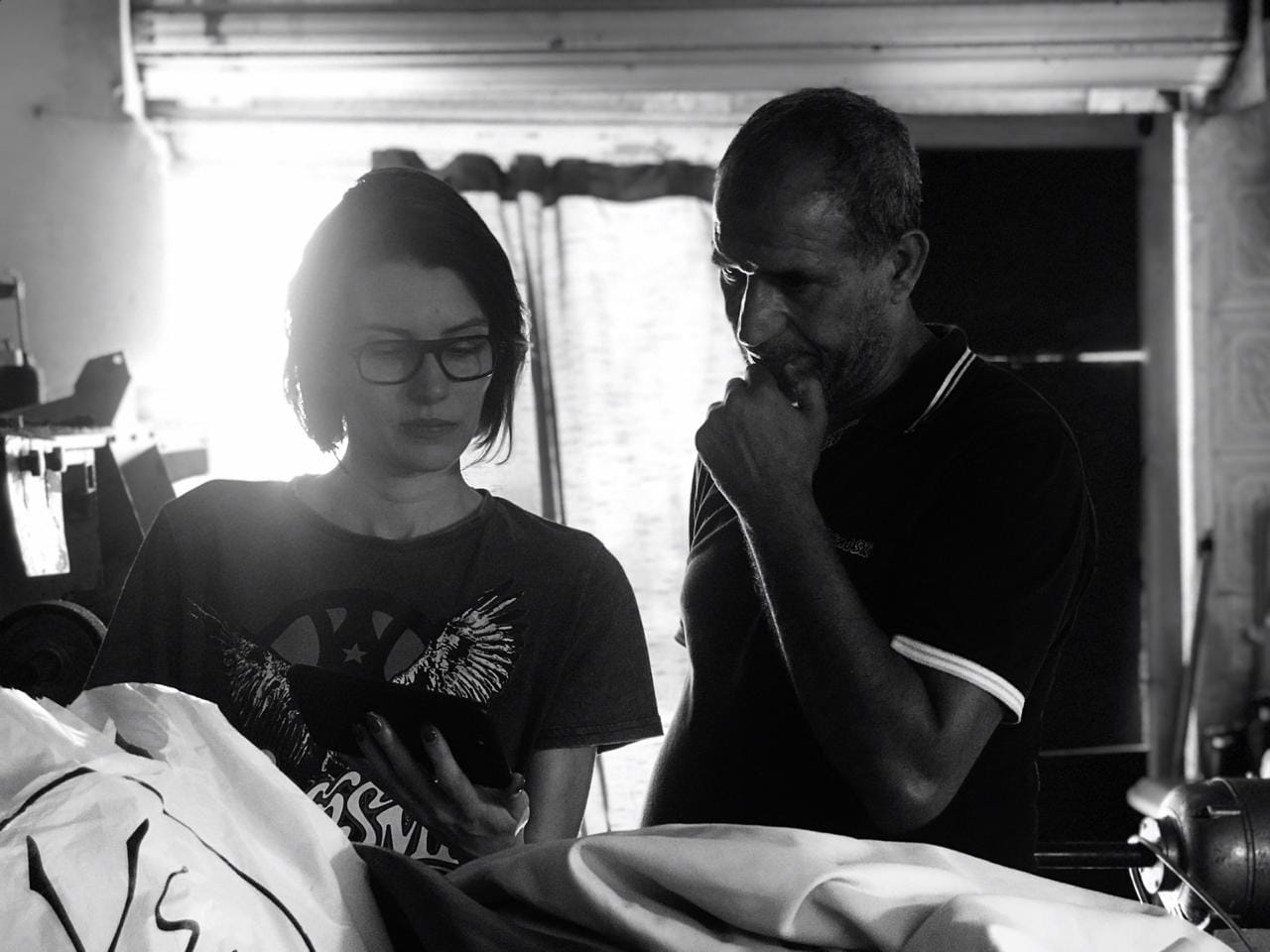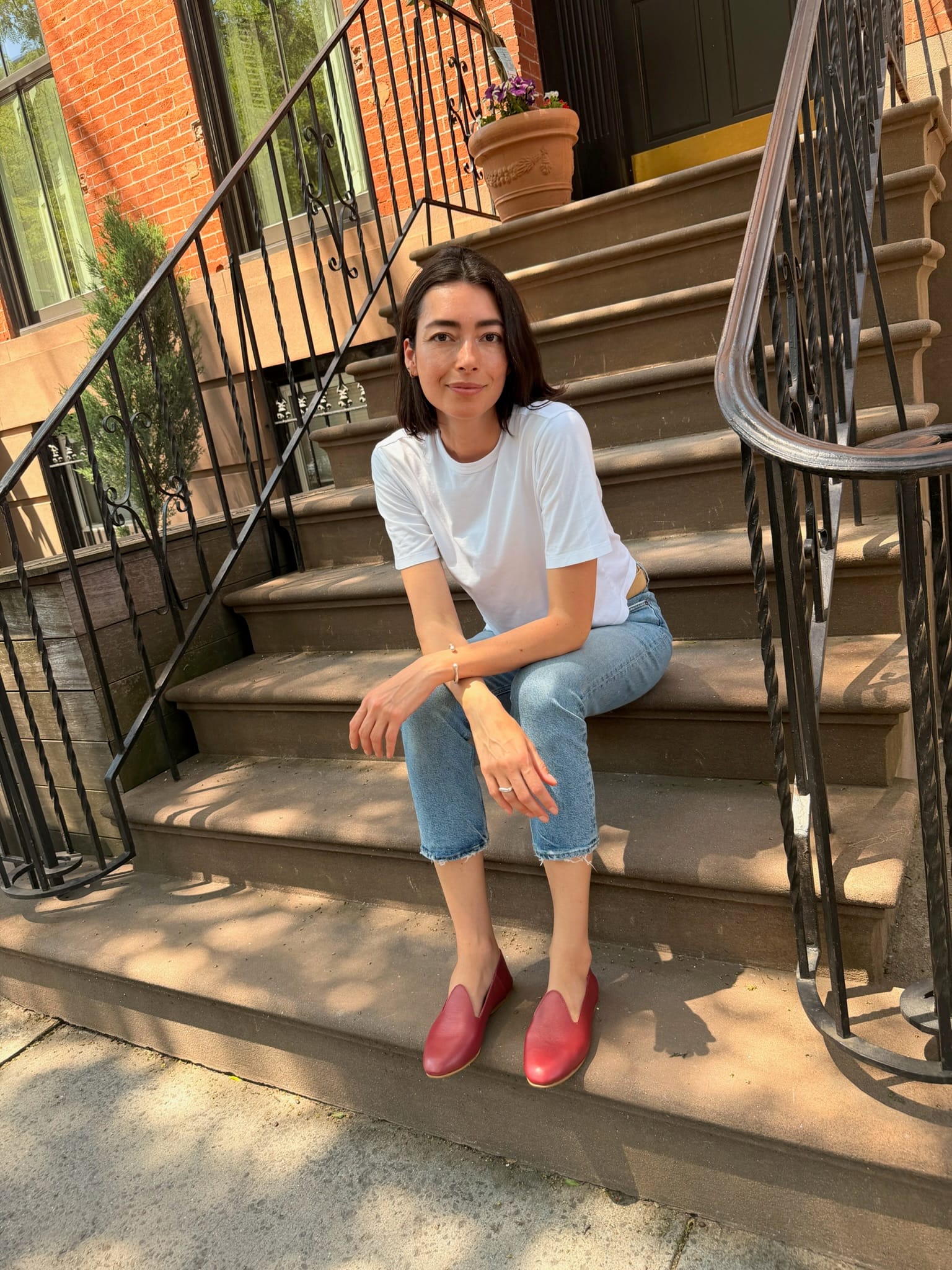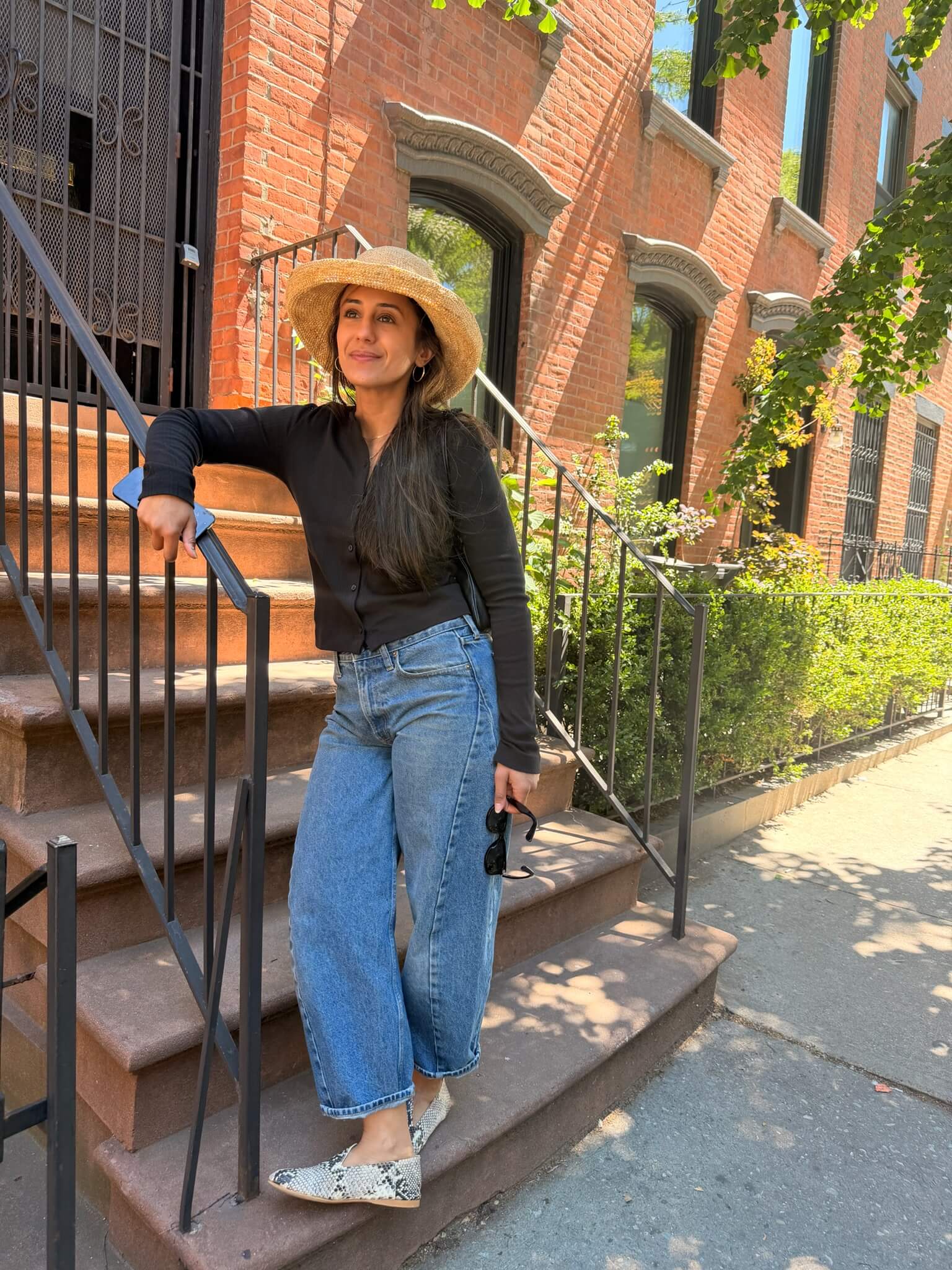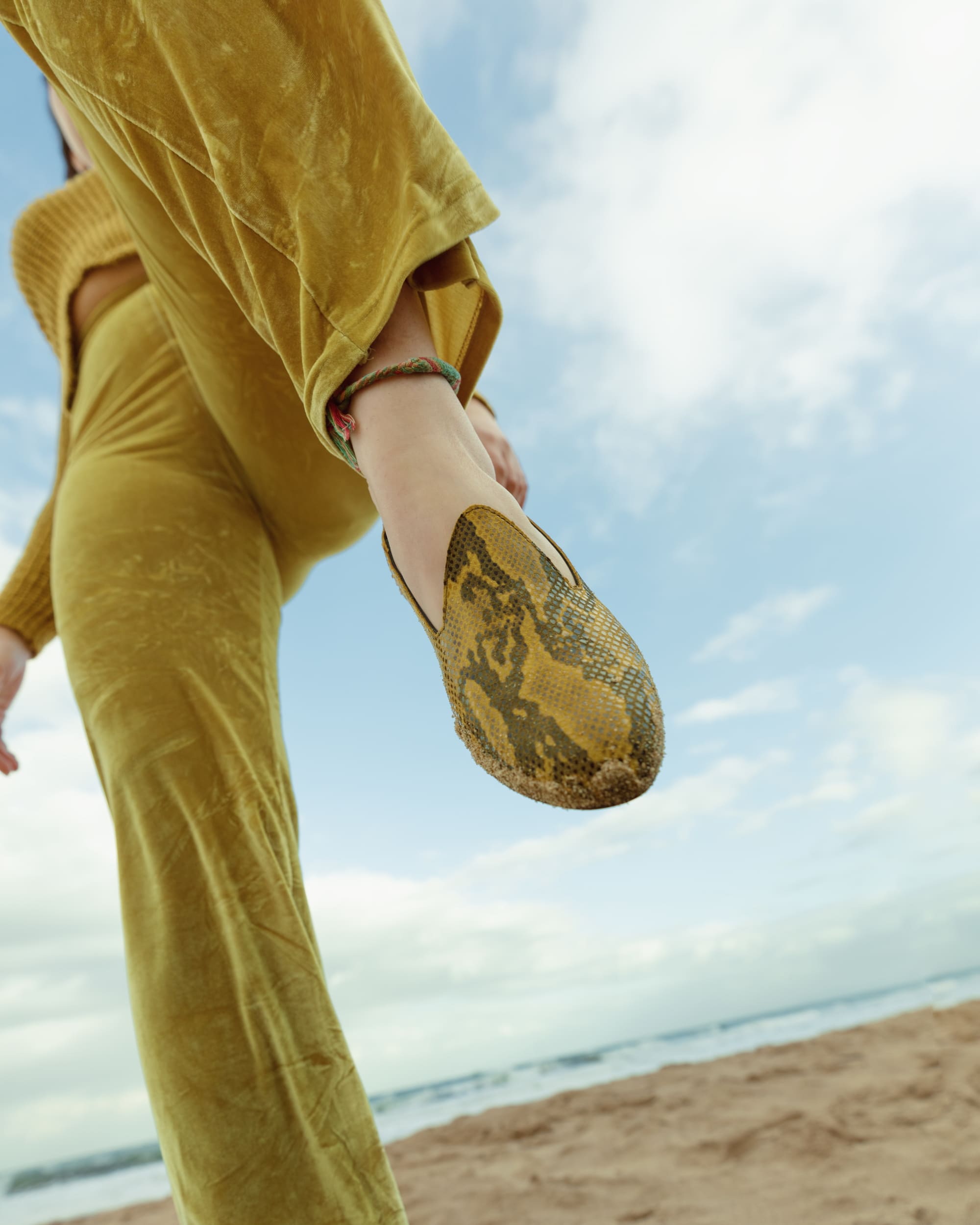

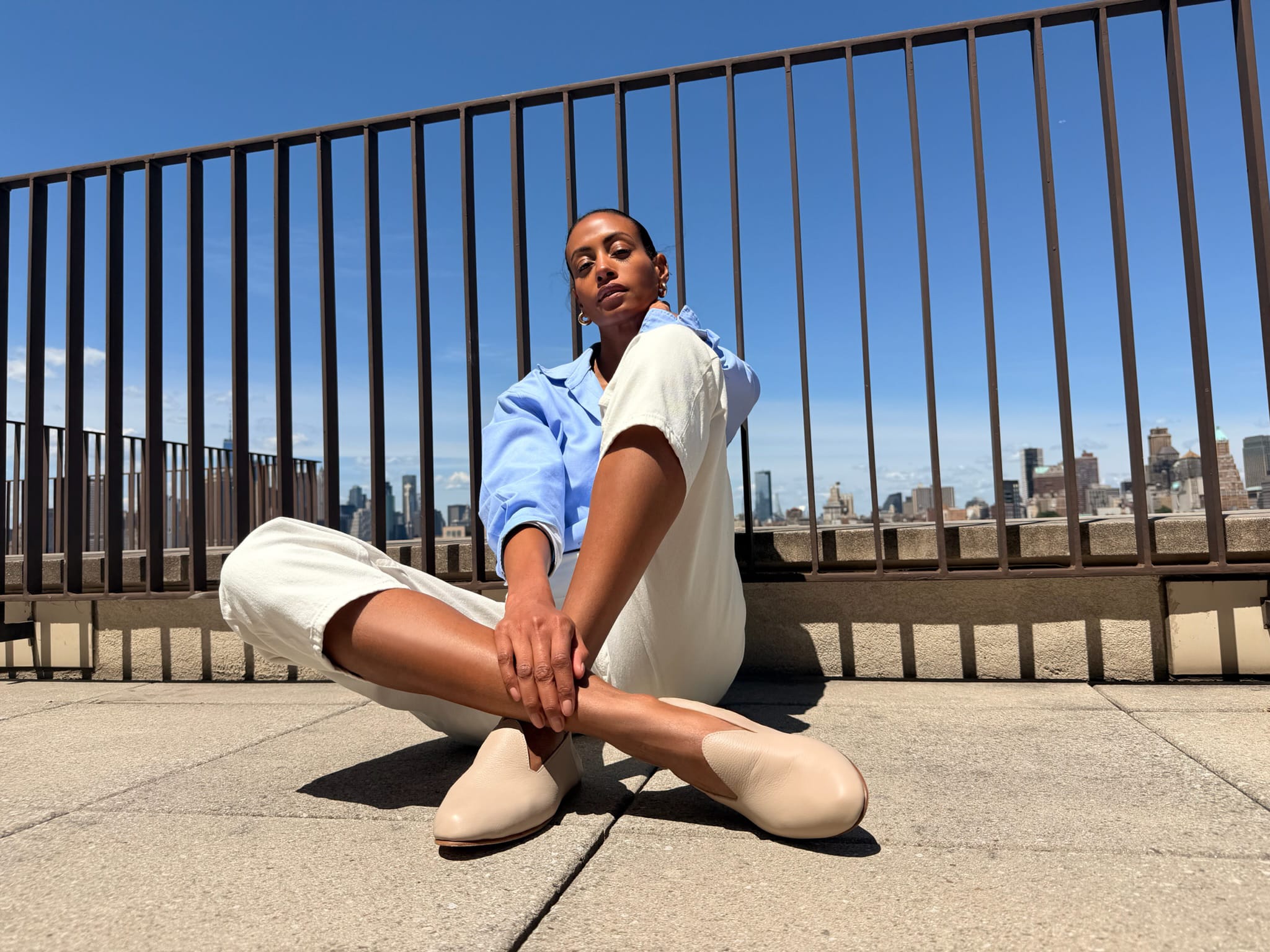
Second in The Next Step, our cofounder Kenza Fourati’s series on the women she has known across her life. Women who have lived several lives inside one, and are still becoming. Each is photographed in our shoes, in her own clothes, as herself. This month, Thaïs dos Santos.
“I’m going through.”
That is how Thaïs answers when I ask how she is.
When we sit down together, she is preparing to leave the home she shared with her husband and move into a new one with her two sons. She is buying furniture, dishes, all the ordinary objects that quietly announce a life in transition.
“At least the mattresses have arrived,” she says.
There is a home to build. Her children need somewhere to sleep. The mattresses have arrived. She will handle the rest.
This is how Thaïs moves through the world: she looks at what is in front of her, sees what is needed, and begins solving it.
“I’m a fixer,” she tells me. “I love puzzles. I like taking things apart and trying to build them back together.”

If you have worked in fashion in New York, you have almost certainly crossed paths with Thaïs. For years, she has been a familiar, beloved presence on sets across the city. I have always known her by her enormous smile, the kind that makes it easy to approach her, talk to her, and somehow, tell her things.
For years, that is how I saw her: smiling, capable, seemingly at ease, the person others naturally turned toward. What I did not see was how much she was carrying behind that ease.
Shapeshifting
We met through modeling and, like so many women in this industry, learned early how to shapeshift. Between countries, cultures, clients, and other people’s expectations.
“You have to behave a certain way,” she says. “You have to talk to people a certain way. Sometimes you forget who your true self is. You shape yourself toward wherever you’re going. Then suddenly, you’re like: Who am I?”
And then, she says, comes motherhood.
“That’s another Who am I? You totally forget the person you built through your career, and then you become a mom.”
Thaïs’s story raises another question. What happens when being capable is the only thing people see?
The trap of being capable
For years, Thaïs was the one holding everything together: working, organizing, calculating, anticipating.
During her first pregnancy, she kept flying to San Francisco for Gap almost every week, right up until she could no longer travel. She managed her children’s schools, activities, and medical needs, and kept encouraging her husband through one professional possibility after another.
The qualities that made her so capable also made it easy for everyone to assume she always would be.
“I was in the background holding everything in,” she says, “until my body started to shut down.”
Eventually, Thaïs understood that something had to change.
“I tried,” she says. “I thought it was my job.”
Her sons clarified what she wanted for them, and for herself.
“They both came into my life to teach me something different,” she says. “They made me stronger and more certain about what I want and what I need. As a woman, as a mother, and as a person. They need the best version of me to take care of them.”
Leaving a relationship of twenty years is not one dramatic act. It is hundreds of small, practical decisions: finding guidance, continuing to work, and creating a new home.
“I’m taking it one step at a time,” she says.
Arriving with the receipts
The instinct that made Thaïs indispensable at home also made her sharp in business.
“You are your own business,” she says. “An agency collaborates with you. I’m not working for you. You’re not working for me.”
At one agency, she noticed that her day rates and commissions were not adding up. When she raised it with accounting, the response was condescending.
Unfortunately for them, Thaïs had just completed a bookkeeping course.
“I put everything down and sent it to accounting,” she says. “They spoke to me like I didn’t know what I was talking about. I said, ‘You check your numbers. I checked my numbers. They are incorrect.'”
The agency came back and admitted she was right.
“I’m very nice,” she says. “But don’t take me for granted.”
When Thaïs does not understand something, she learns it. When the numbers do not make sense, she checks them. When someone underestimates her, she arrives with the receipts.
Her business mind was never separate from her modeling, her motherhood, or her personal life. What is changing is where she chooses to point it.
Making people feel seen
Thaïs is now studying hospitality through Cornell while continuing to model and managing two Airbnbs in Brazil. She is learning marketing, pricing, and how hotels and restaurants create experiences.
The idea came when she took stock of everything her career had given her.
“I have so many years in this business,” she remembers thinking. “I’ve worked with big clients and small clients. I have regular clients. What can I do? I’m looking for the next step.”
Hospitality may sound like a new direction. Listening to her, the connection is obvious. When I ask what modeling taught her, she does not hesitate.
“Understanding your clients. Psychology.”
For a while, the plan pointed to Portugal. Today, she is open to building this new life there or in New York. Either way, she wants to learn inside the industry before creating something of her own.
“I like to learn from other resources first before opening my own business,” she says.
There is no fantasy of overnight reinvention.
What draws her most is the chance to create places where people feel at home. She describes the great hotels, the ones where they know your name when you arrive, where what you like is already waiting before you ask.
“You feel valued,” she says.
It is the kind of care Thaïs has spent her life giving: noticing what people need, often before they have found the words to ask for it.
I understand exactly what she means.
So much of women’s work stays invisible: the emotional labor, the management, the calculations running quietly in the background. Modeling made us extremely visible, but visibility is not the same as being fully seen.
“As women, and as models, it’s still a fact,” Thaïs says. “You’re seen, seen, seen, but nobody wants to hear you. Nobody thinks, ‘Oh, she has something to say.'”
Thaïs is still finishing her course, still modeling, still working out what this chapter will look like for herself and her boys.
She does not have every part of the future mapped out.
But the mattresses have arrived.
This time, the woman who has spent her life making things work for everyone else is directing that same intelligence, care, and determination toward a life of her own.
With love,
Kenza