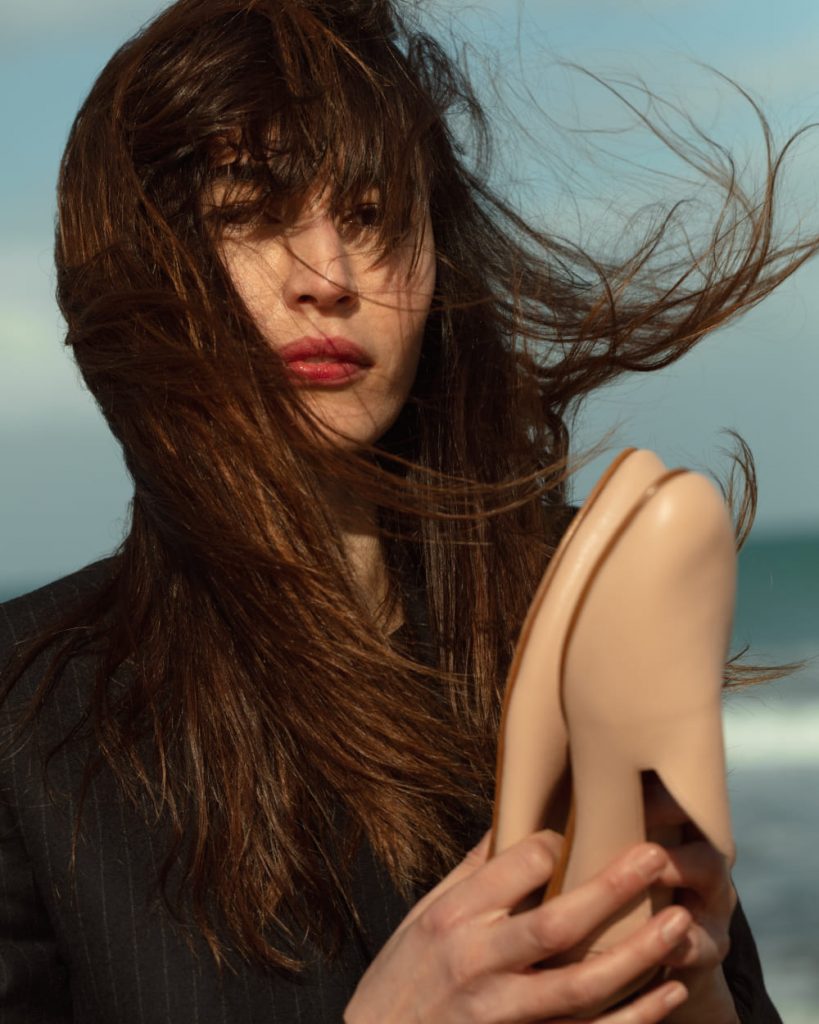
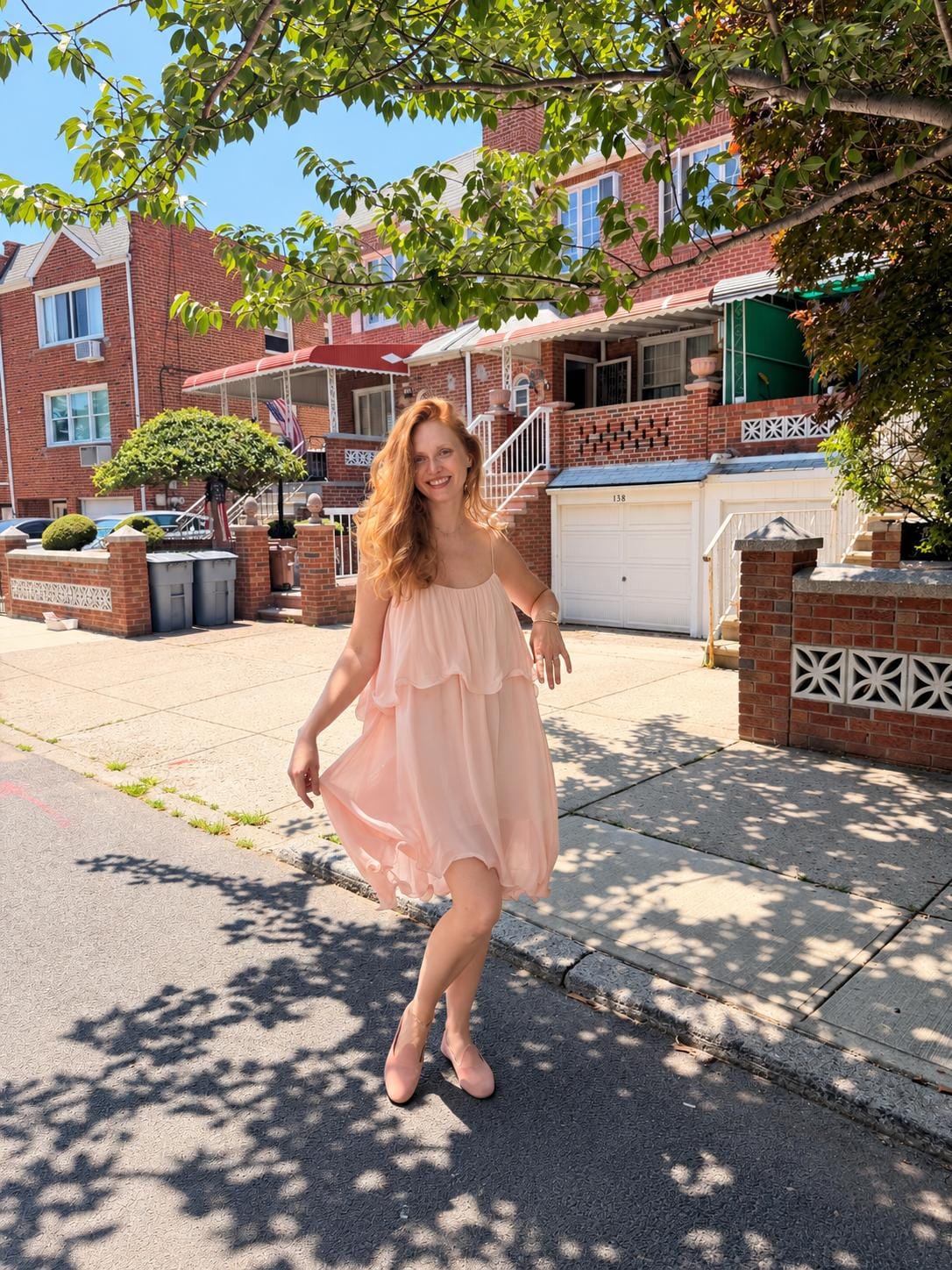
Third in The Next Step, our cofounder Kenza Fourati’s series on the women she has known across her life. Women who have lived several lives inside one, and are still becoming. Each is photographed in our shoes, in her own clothes, as herself. This month, Natalya Piro.
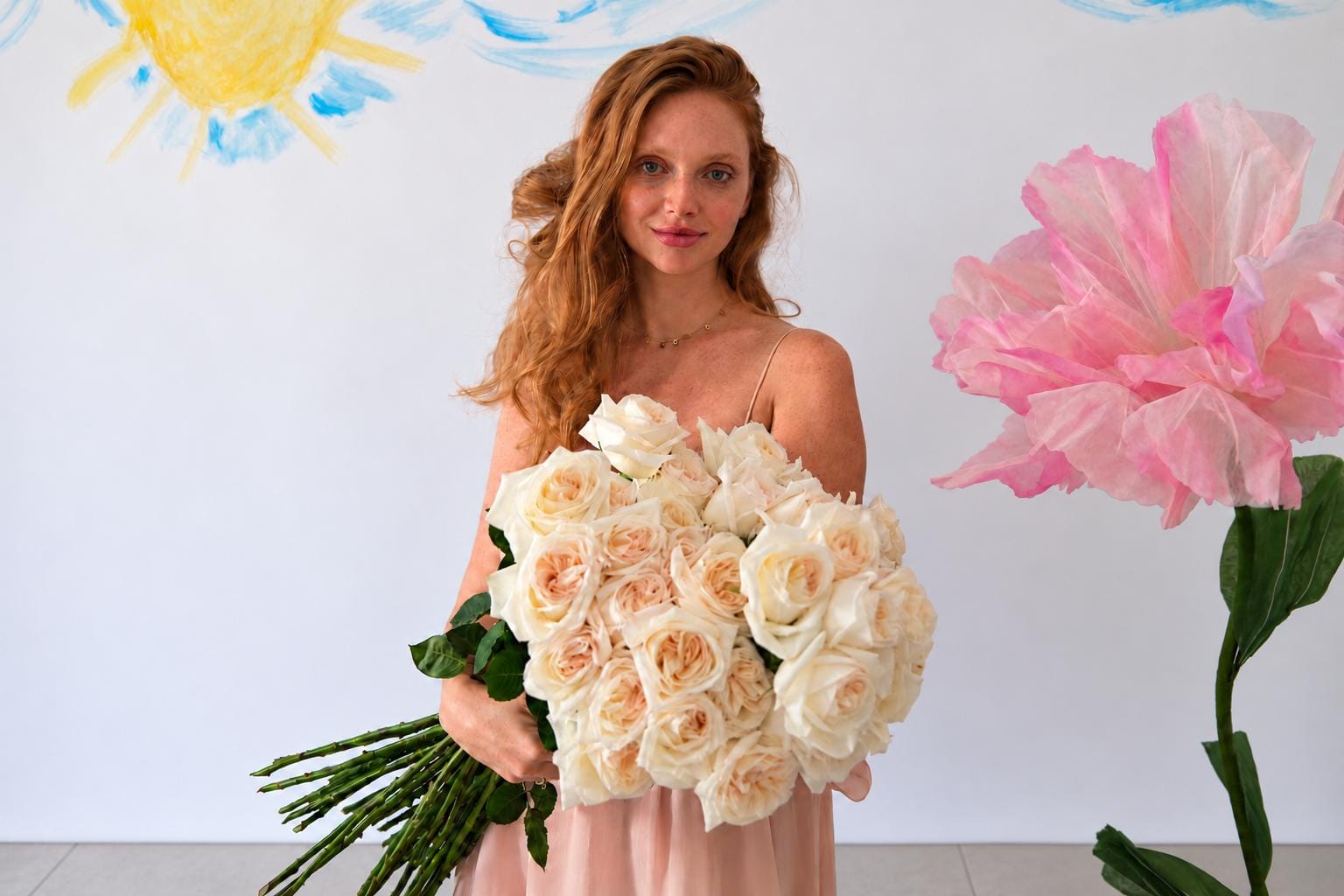
At Natalya’s home, she makes me a bouquet as we talk.
Originally from Odesa, Natalya Piro built a career working primarily in beauty, with advertising work for Kate Spade and Ray-Ban and covers of Elle Mexico and Glamour Italy. Today, she is a mother and the founder of Piro Flowers.
She is clear about what she brings to her work, and whom she wants to work with.
“I don’t want to waste my energy explaining to people why I’m worth it. I know that I’m worth it.”
Who am I?
There were years when she felt very differently.
“I had my dream life. I had my apartment, I was working well. Everything was good.”
For more than fifteen years, modeling had given her work, travel and independence. Then, she says, her agent stopped sending her to castings and told clients she was unavailable while building her own PR agency. Three months later, the agent left. Natalya’s regular clients had moved on.
“What should I do now? Who am I? What can I do?”
She tried to find work in a coffee shop and was turned away for lacking experience. Modeling was the only way she had ever supported herself, and now she wasn’t sure what else she knew how to do.
Finding her own way was something she had done since childhood. In Odesa, her parents worked to make ends meet after the Soviet Union collapsed. Her older sister helped raise her, but Natalya remembers spending much of her time on her own.
At eighteen, she married her boyfriend, eager to leave home. Her parents had insisted on marriage if the two were going to live together. When modeling offered her a chance to go to New York, he supported her and bought her ticket. He has since become a friend.
She arrived alone, without English. Having little to lose made her less afraid to leave.
“When you’re not afraid of taking chances, the universe always has something for you.”
Just like magic
Years later, with her modeling work disrupted, she met the man who would become her second husband. During their trip to Bali, she visited a healer. His observation stayed with her.
“You give too much to people, but you don’t know how to recharge your energy.”
Soon afterward, back in New York, she became pregnant unexpectedly. She believes the healer had unlocked something in her, her energy and her fertility.
“It was just like magic. But it changed my life so much, completely.”
Around the time her son was born, her mother passed away. She was becoming a mother while losing her own.
Natalya hadn’t felt ready. Grief, physical pain and the lack of family nearby made those first years overwhelming. “I think I was just in such a big shock.”
Later, surgery for what she describes as two herniated discs left her recovering in pain, afraid she might never move the same way again. She sought help and was prescribed antidepressants, which she says left her feeling worse, going through the motions.
Flying
Food became a way to escape the pain, “to calm down and feel better.” She gained twenty-two kilos, and her back began hurting again. Missing the people and activity of her former life, she opened Wonder Room, a café in Bay Ridge, with a partner. Through the café, she began working with flowers.
Making arrangements felt different from the exhaustion of running the shop.
“When I was doing flowers, I was just flying.”
She eventually sold the café to focus on flowers and events. But keeping busy had also helped her avoid the grief and pain. At a retreat with other women in the Catskills, she finally stopped. “There, I just stopped and I cried and I cried,” she says. She describes feeling able to breathe again.
“Allow yourself to be in pain. Go through these moments. I never allowed myself anything.”
Other voices
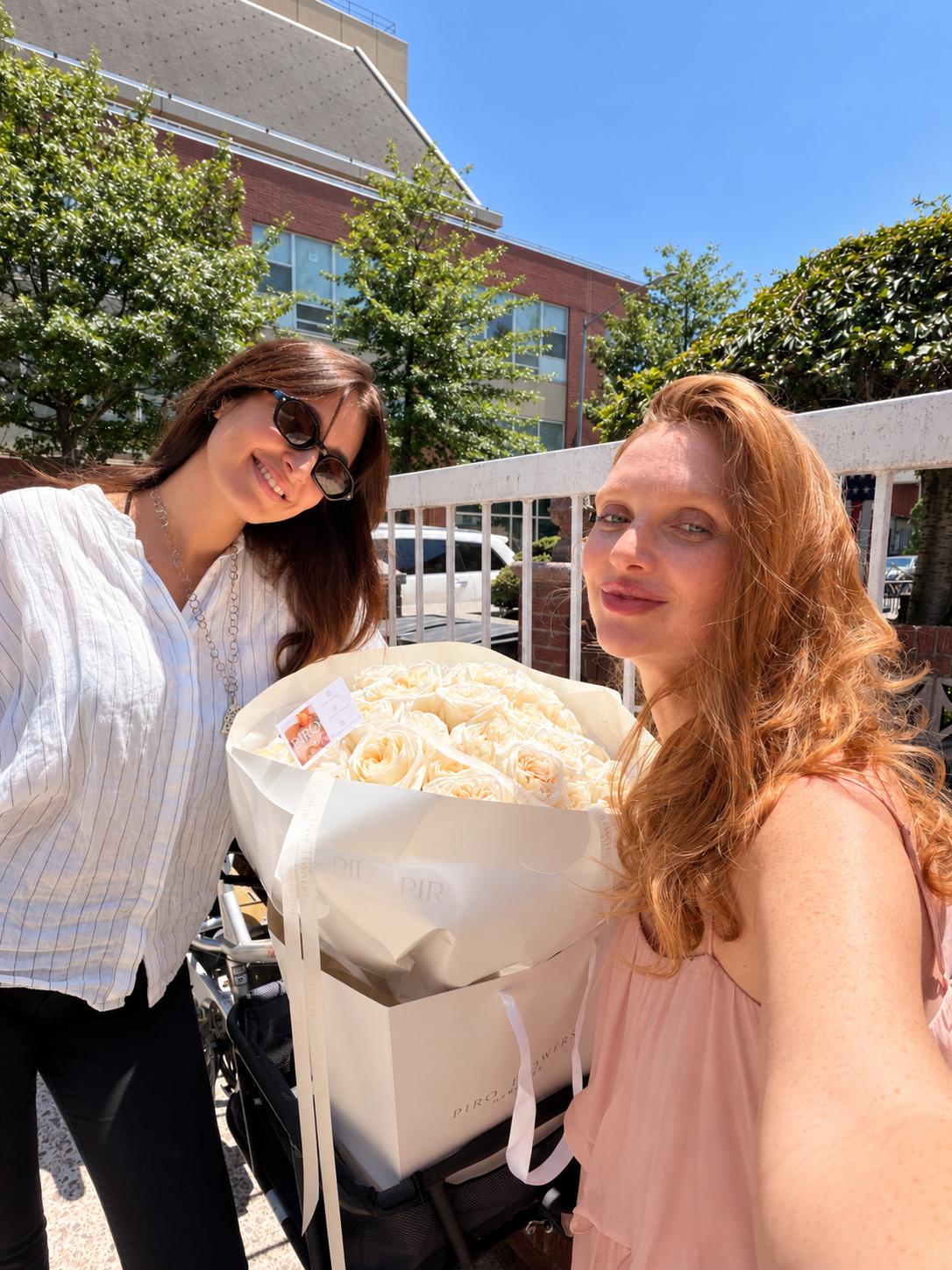
She continues to sing with other women. When she speaks about feminine energy, these are the moments she describes: their voices together, the conversations, being able to cry.
“When you’re not only hearing your voice, when you’re hearing other voices, it’s much easier for me to open.”
At home, her friend Irina, also a model, has become part of the family. A short stay became years when the war prevented her return to Ukraine. Natalya’s son calls Irina auntie.
“It’s so much help when you have another woman in the house.”
Natalya found her voice among these women. Now she posts videos without makeup and speaks on camera, learning not to be ashamed of what she says.
“The way I talk to you right now, I would never have talked to you when I was modeling.”
“I just started to be myself.”
When I ask about her next step, she talks about spending more time with these women. Somewhere she can relax, cry, “be a little girl.”
I think of the little girl in Odesa who described herself as growing up mostly on her own.
With love,
Kenza
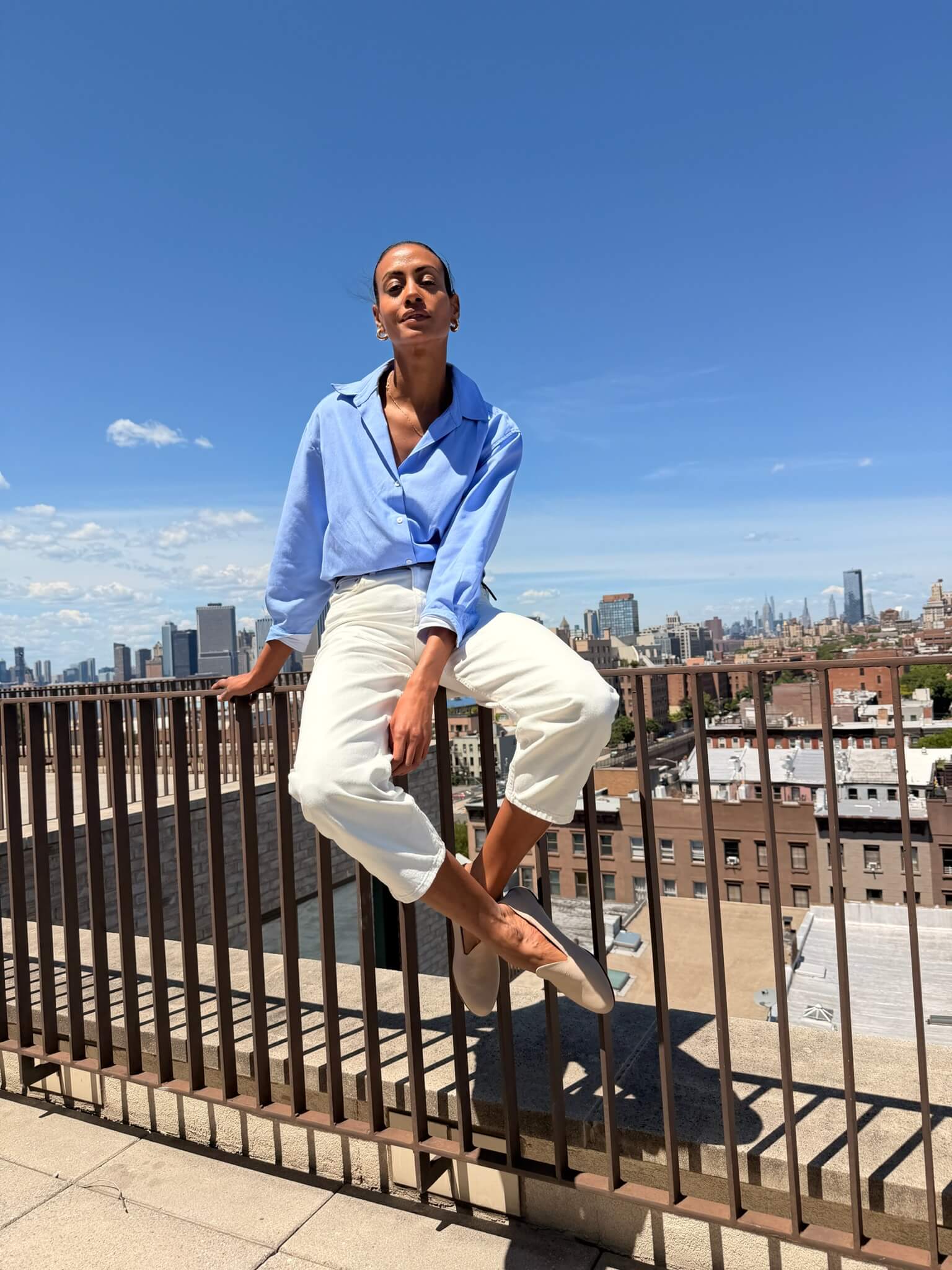
Natalya photographed in her own clothes, wearing La Babouche OG Rose (now sold out) by OSAY.
This conversation has been edited and condensed for clarity.